academisch project master of interior architecture – MIA
” The first assignment leads us to Aachen, not more than half a day’s walk east of Maastricht.
We cross a political border, but do not change cultural context: the land between Meuse and Rhine. Being deeply rooted in the Western Christian Civilization Maastricht and Aachen up to now eloquently give evidence of their past. ‘ onze Lieve Vrouwen Kerk ‘ , the ‘Aachener Dom’ , you name it. Peripheral to that less geograhical, more in its public perception, lies ‘ St Frohnleichnam’ . Poor, beautifull loving and lonely, as Rudolf Schwarz, architect of this specific catholic church from 1930, once put it. A cluster of white prisms, not too well maitainted, on distance to the historic centre, amidst a working class neighbourhoud in one of Aachen’s eastern districts. One still may smell the fumes of nearby production plants. You do not get here if you do not live here, unless you sense what is awaiting you.
Germany in the late 1920’s, times were restless. Great war was just over, great depression and even greater despotism were already in the air. Yet at that ver time like in a feverish search for escape in the new beginnings you had that outburst of cultural experiment of all kind. St. Frohnleichnam’ you could say, is an emblematic prototype of search for ‘ Neues Bauen’ in its most radical and existential disposition. Rudolf Schwarz left Berlin and came to Aachen in 1927 at the age of 30. With virtually no reputation as practising architect, reknown as promising talent who had rather written about how to think of architecture, he became director of the local arts and craft school: an experiment. very much like the ‘bauhaus’ the Aachen school was interdisciplanary, but Schwarz followed an agenda di erent Gropius’ , Meyer’s or Mies van der Rohe’s. ‘Neue Sachleichkeit’ versus ‘ Neue Dinglichkeit’, as Schwarz once enigmatically suggested.
St. Fronleignam’ is to be seen as a case study of that agenda. Being a charismatic gure of Germany’s catholic liturgical movement, Rudolf Schwarz had focal interest in ecclesiastical architecture, that continuously centred all teaching and practising. His recommendation for ‘St. Fronleichnam’ was an earlier prize winning competition design: ‘ Heiliggeistkirche’ in Aachen. ‘Heiliggeistkirche’ as role model for more than its architectual conception showed a co-authership with Hans Schwippert and Johannes Krahn, Both members of the school’s sta .
‘St Frohnleichnam’ continuess that specific co-authorship and broadens it by integrating even more personnel and related expertise in gold smithery, sculpting, textile design, glazing. Rudolf Schwarz choreagraphed all induvidual contributions by balancing space and light, objects and materials in a highly sophisticated manner, as to form one iconography. ‘ a testimony of religious poetry’.”
Research

“ We meant the primal deed of building, the process in which the church becomes a living form. Althought Schwartz sees an inspiring translation of this fact in the medieval churches and cathedrals, he feels that the technical priciples have now changed so much that there is no way back. The meaning of architectual concepts has shifted too much. For us the wall is no longer a heavy masonry but rather a taut membrane.” Grafe. Christoph.1997.Oase N 45/46
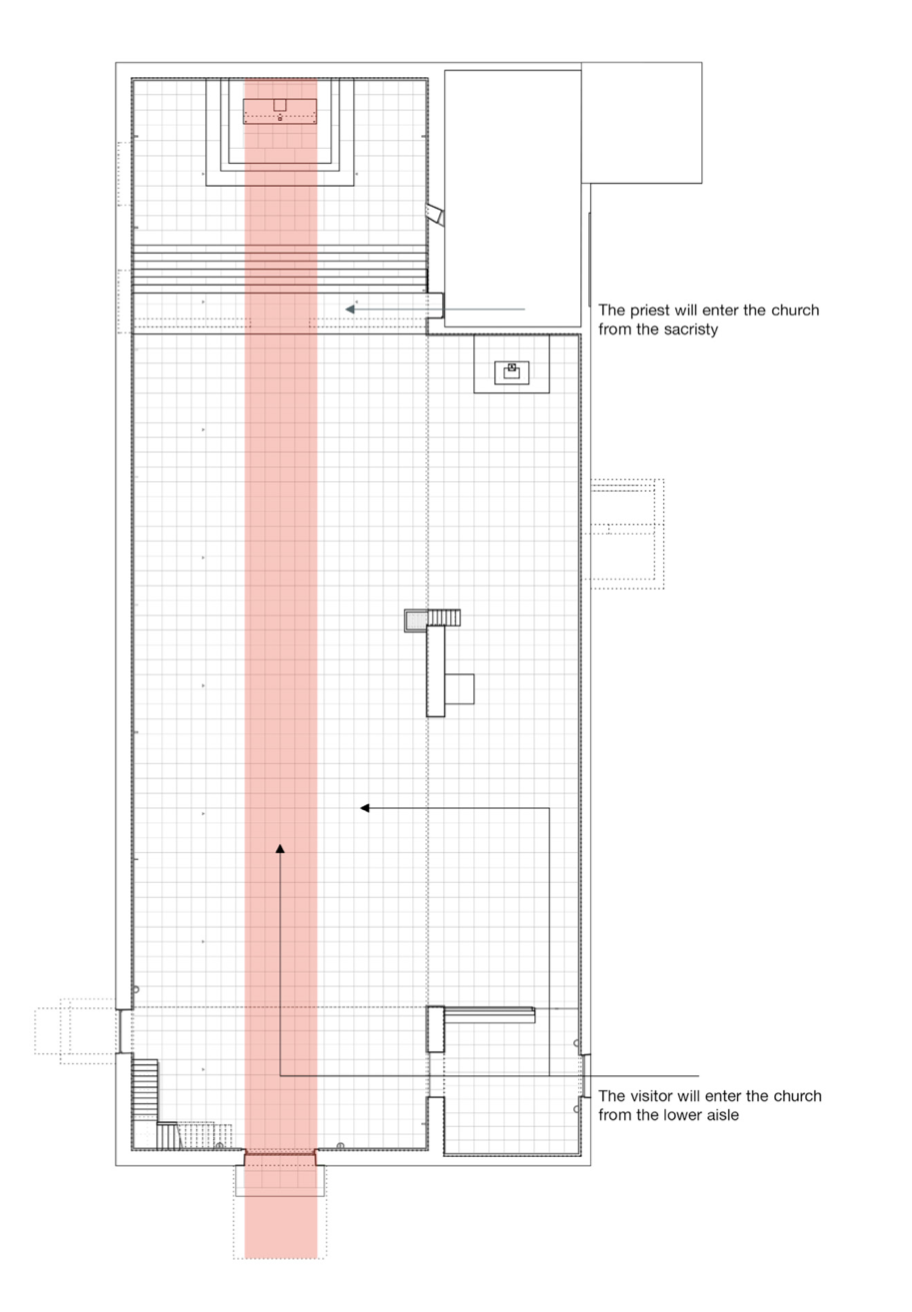
When you compair the early christian church and the church from Schwarz, You see that the archetypal forms are more or less the same, for example the centre of the church, the door is lined up to the altar.( the way to the holy Jerusalem) And instead of two lower aisles, Schwarz only made one.
The church has two entrances, a ceremonial door on the main axis and a lower, double door into the single low aisle on the south side which links the nave with the campanile. Both doors are made of steel and, originally, had a copper panelling. From the door to the aisle the visiter enters the twilight of the entance hall, which is saperated from the aisle by a large glass panel. Viginal white stucco emphasises the contrast between de nave, 19 metres high, and the low aisle which is a mere 3,5 metres high. The windowless aisle faces the nave like a large, low niche opening towards the taller, lighter space.

The project is based on an extensive research of the church’s building’s history. Initially fronleichnam showed a cubicle volume on it’s north- eastern side, that was to provide additional excess and or enter the building. The project examines possible coming into beings of that annex to the annex of the side aisle and its disappearance. Obviously that specific part of the building did not have a long life. But I think that it has a potential giving it a second life. The interesting part of this cubicle volume is that the route is focused on the tower of the church. It shows that the tower (campanile) is an important element of the church’s architecture. Because of this route I presumed it was used to excess the building. The campanile of the church is the focal point of the city, and Schwarz like to use that idea one last time by excessing the church and going back into the daily life.
a chair
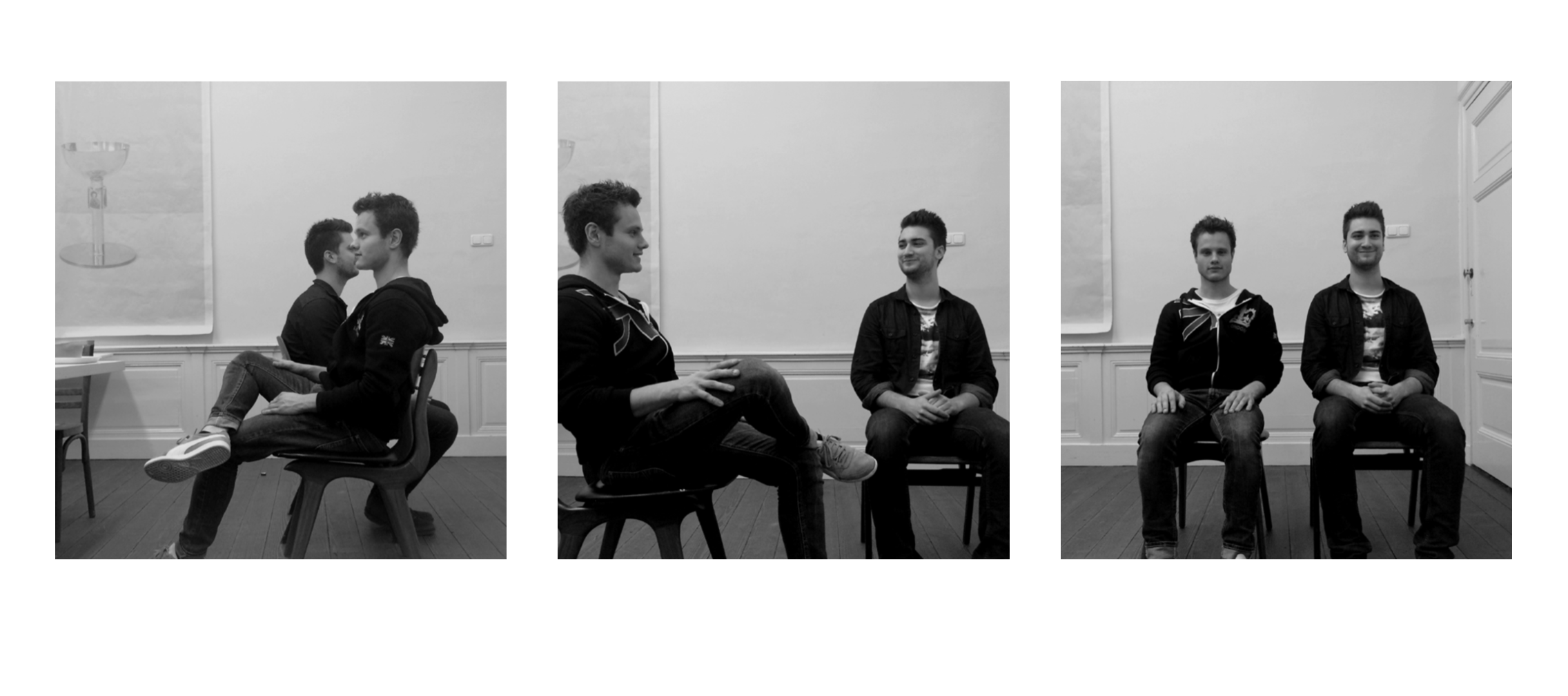
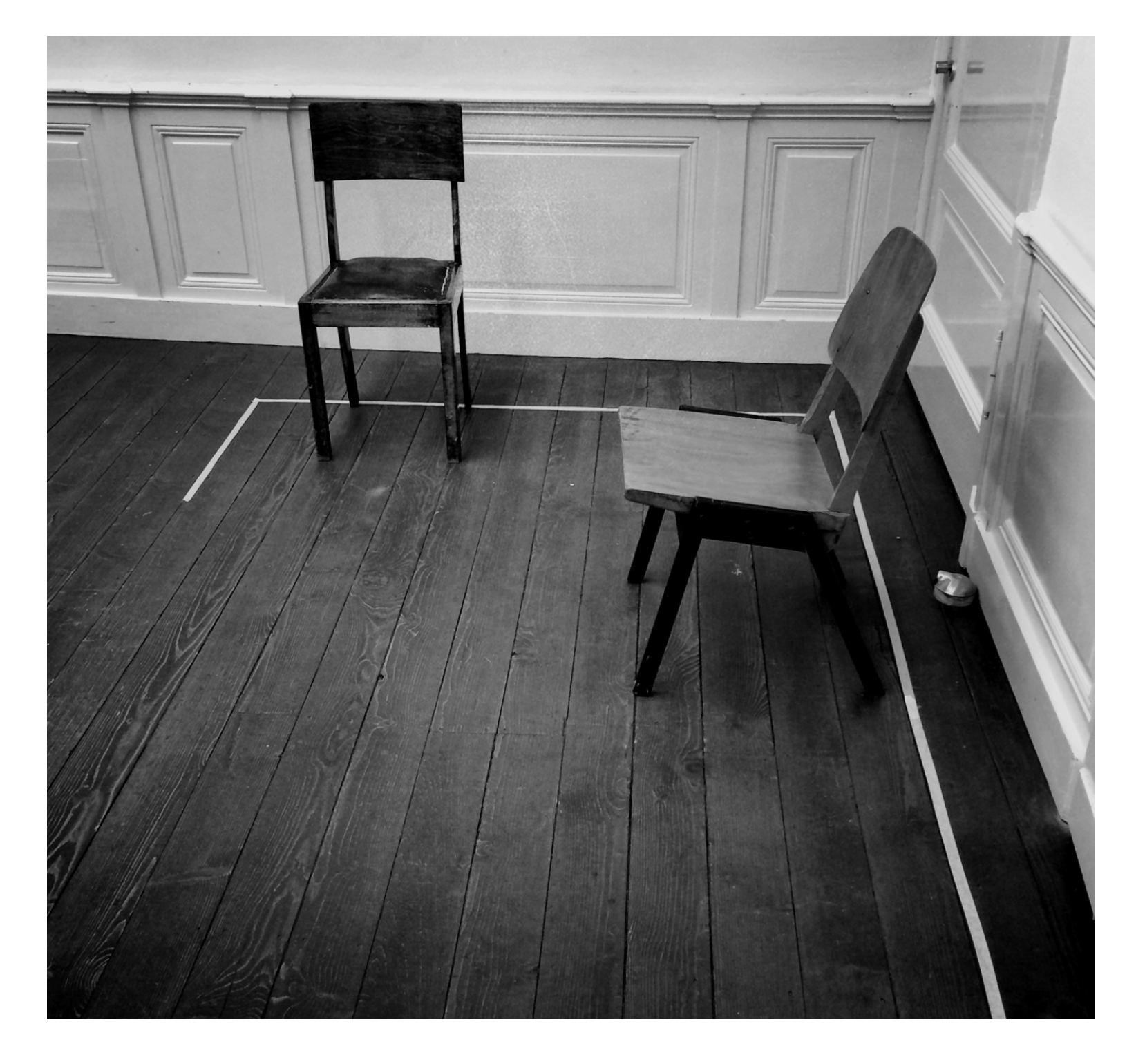
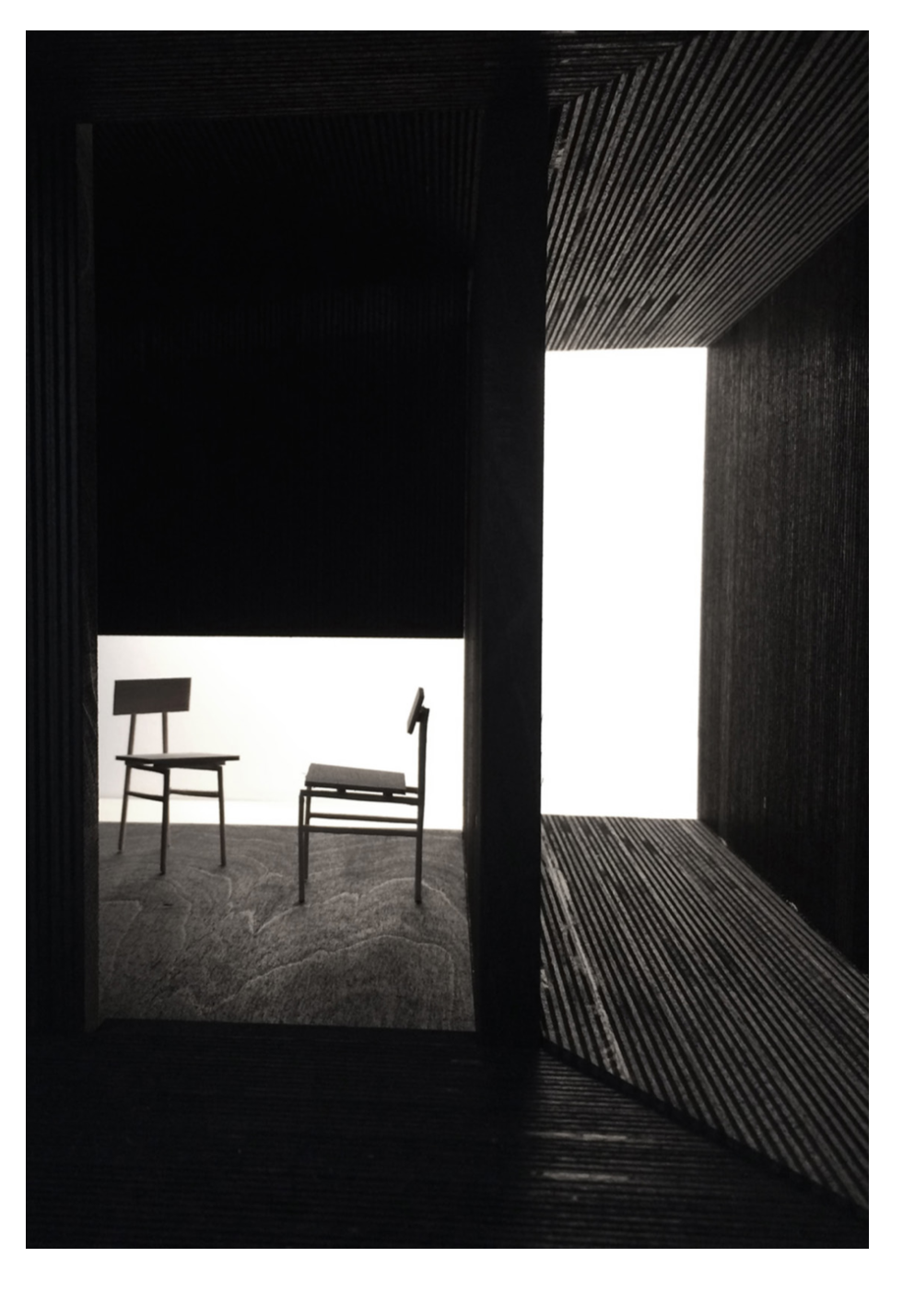
‘Confession’, in a contemporary profane context means that when you are in a dialogue, every person has his own preference. In a conversation there are many ways you can talk to a person. Important in that conversation is how you take an applicable position to find trust and start the process of ‘catharsis’. When you talk to a person there are many aspects that influence your storytelling, like for example body language, expression, and emotions. In confession these aspects are very problematic, because they can make you feel like you are judged on the things you have done. Like in old confession chairs the confessor just want to tell the story and not being judged for that. That’s why I think it is important that you can choose your own position. By having this personal influence to position the chair, the chair gets an importance into the ritual of the confession. The ‘score’ or pattern, choreography of chairs is in a constant flux, depending on the discourse. Because of this importance I’ve designed and build a chair.
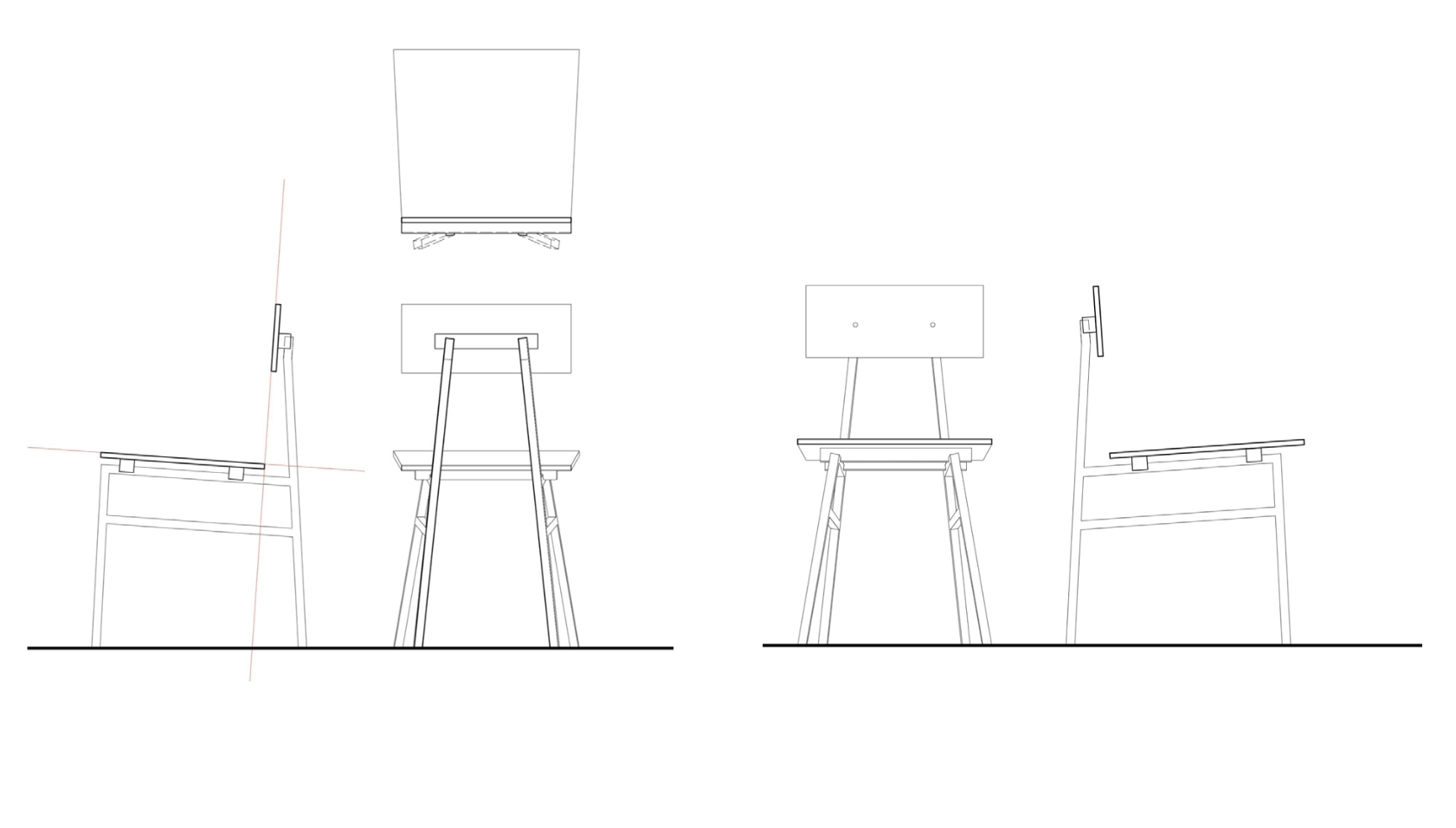

Research and design of the Confession-space
By designing this space, I was building a script how I would imagine the space. What would I like to see.
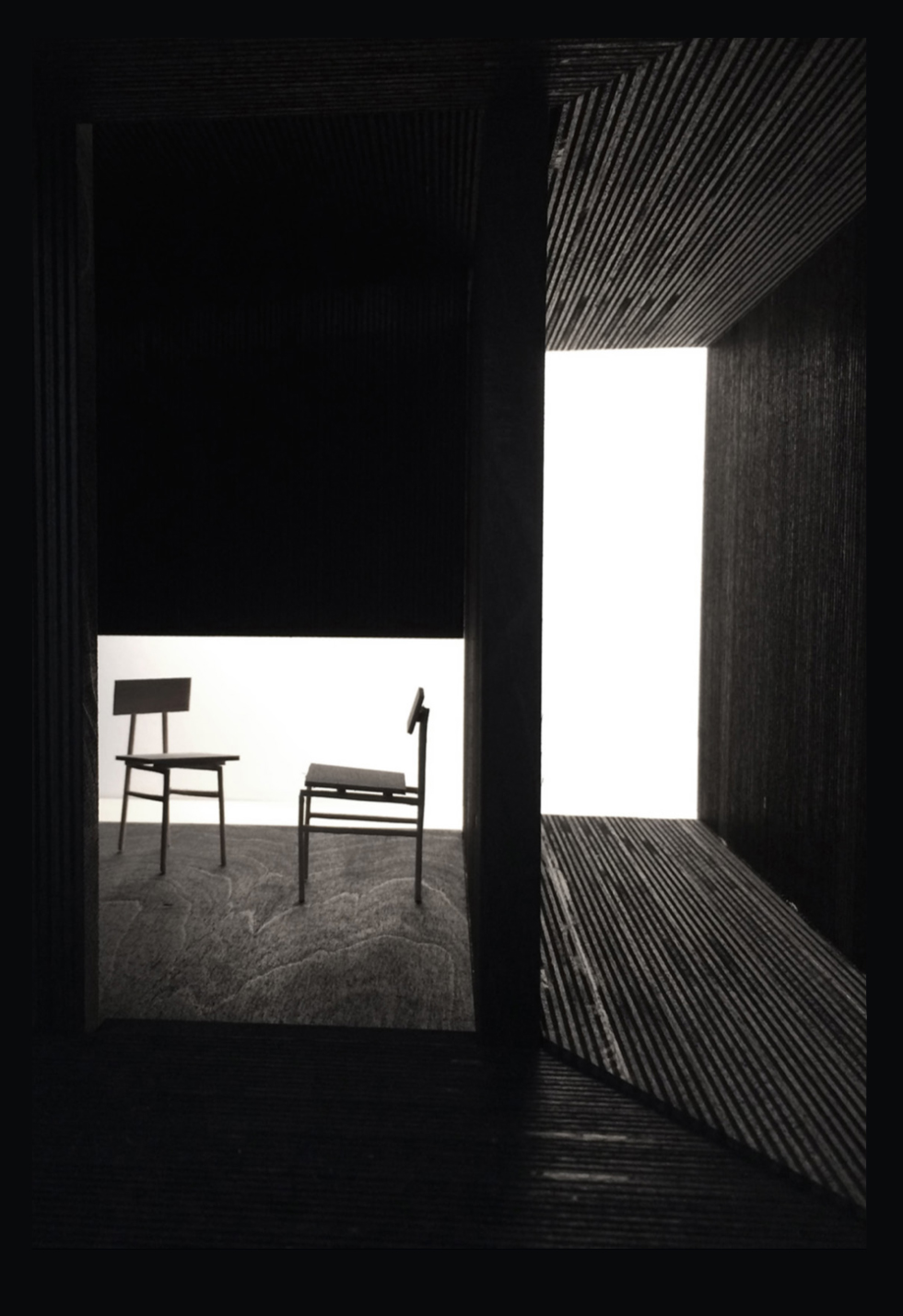
I walked into this dark space, where two chairs standing very close to each other. I could image how the last conversation took place. light is coming into the space and bumps into a golden basket, the water is still moving, its fresh water. I could see that. I washed my hands and hung my coat. I have positioned my chair so that I secured my ‘introversion’ . The priest came in. “Speak to me” he said..
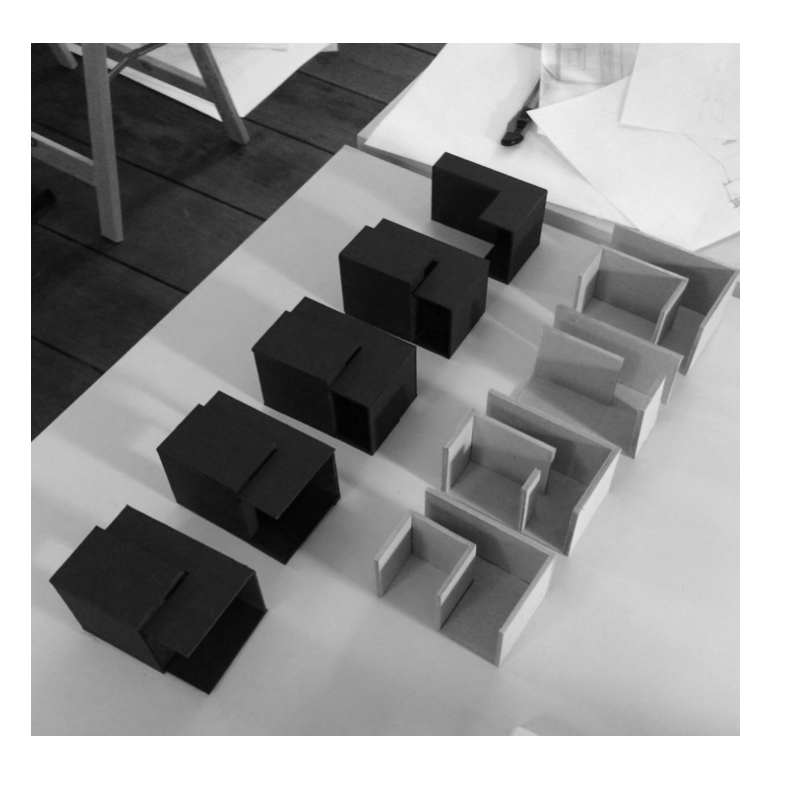
Confession, maybe an untimely subject. But maybe it isn’t. The question that was spinning in my head the last half year was, What does confession actually mean? What are the conditions of a confession? In old times confession was a holy sacrament, when you did something wrong and you felt sorry about that, you could go talk to a priest and ask for forgiveness. The conversation took place in a little space called the confession chair. The priest was sitting into a chair, and the confessor was kneeling next to him, to speak in his ear. There are still some churches, countries, continents, where the confession takes place like this.

‘Confession’ is as a matter of fact something that happens to us in everyday life. Except in these specific conditions of the ‘confession chair’. I think confession is a generic process. We constantly refer our thoughts and behavior to moral terms we inherited in the social ambiance we were raised in, have our doubts, guilt. The ‘confession chair’ is a ‘mechanism’ of historical, western, christian and rigid tradition, which lost its formal relevance.


Draft
Next to the positioning of the chairs, the conditions of the space itself is also of importance. The light conditions and materiality of a specific space. In dark spaces you are more aware of the light situations. The dark space makes the difference between shadow and light more vissible and it also makes you more aware of textures because you can focus on a object in a specific way. When an object has no color or is black , you start looking at different aspects, such as the texture of the material. The perception of the material or the space itself becomes different, then when it would be for instance a colorful object.
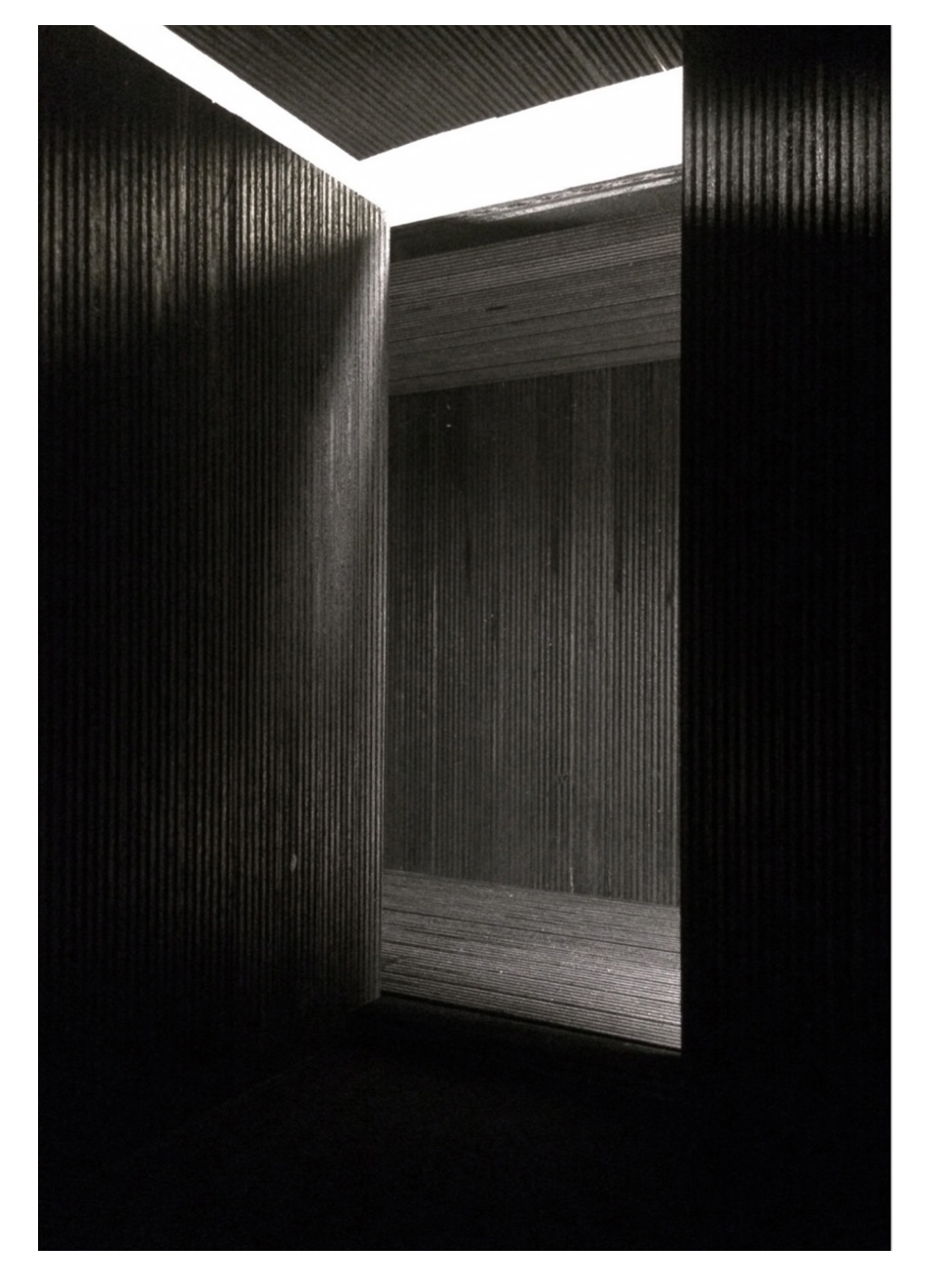
In the Japanese culture, shadow and light play an important role. In temple architecture the main room stands at a considerable distance from the garden; There the light is so dilute that no matter what season, on fair days or cloudy, morning, midday, or evening, the pale, white glow scarcely varies. You feel like you are separated from the daily life. You might lose all consciousness of the passage of time. I think this is an important phenomenon that allow you to reflect on yourself. This notion helped me to think of the appropriate conditions for this project.
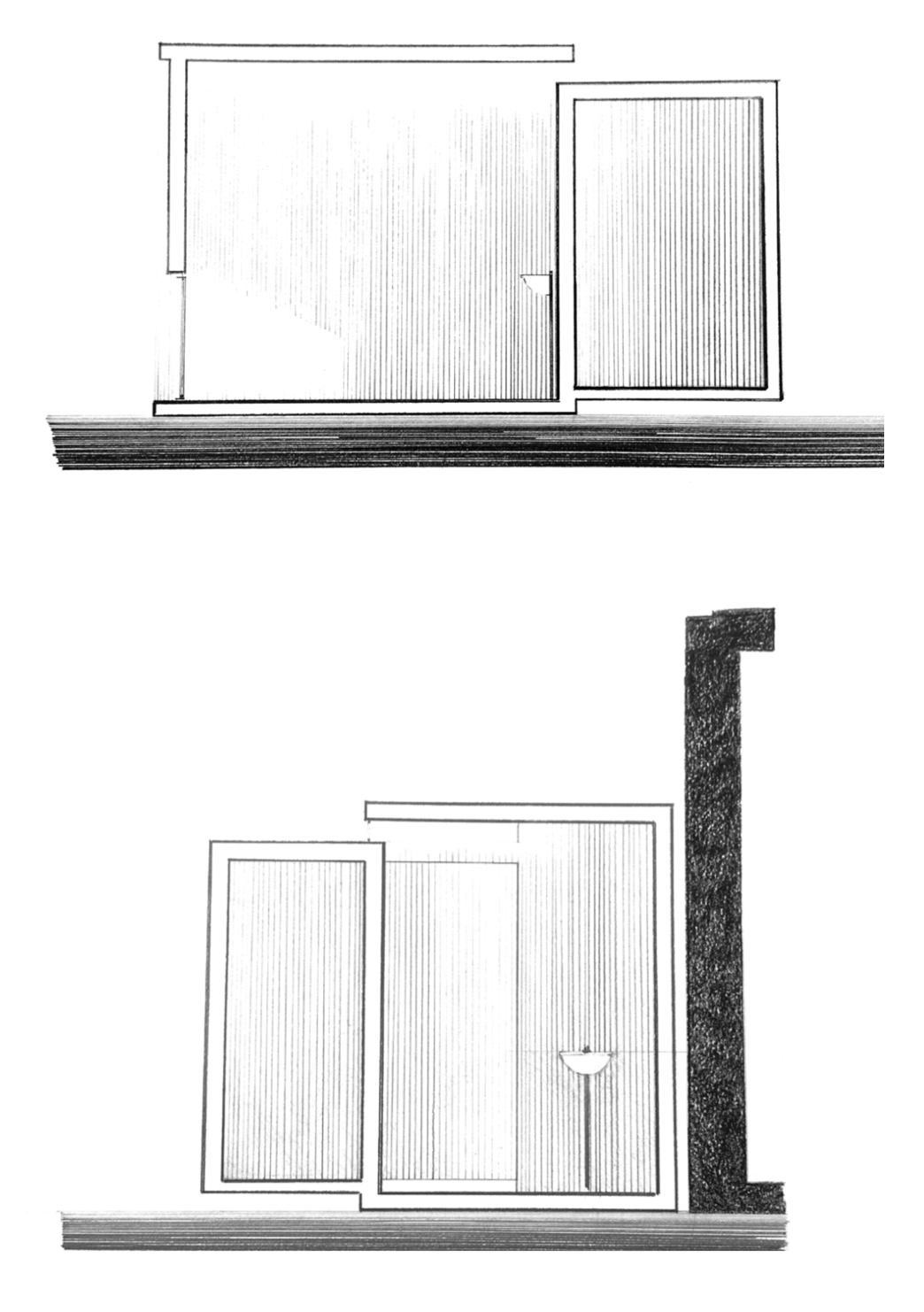
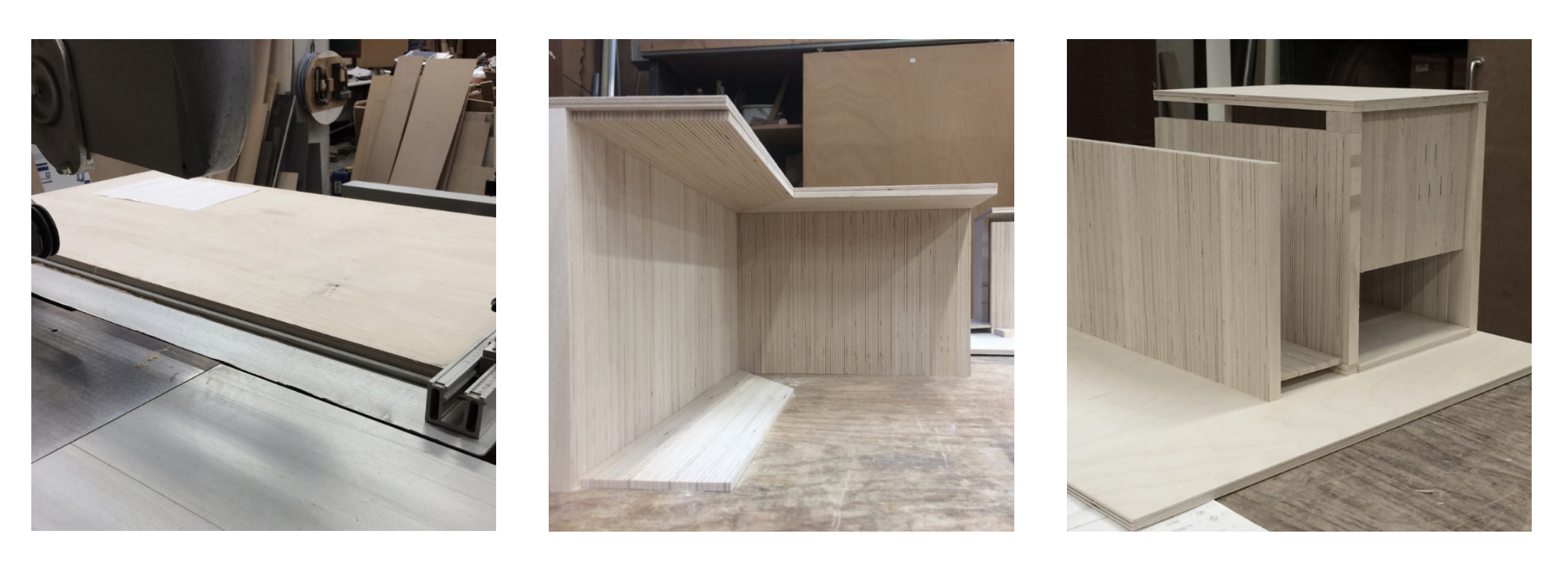
The space is made from black painted wood. The light that is slowly coming into the space shows the texture of the wooden walls and flooring. In the dark corner there is a golden water basket, a faint golden light cast into the enveloping darkness. Into the space there are two identical chairs. The individual positioning of those chairs is the main focus in this project. Before the confession starts you can position your chair in the way you would like to sit. Like I said before, it becomes part of the ritual of the confession. After confessing you get the ‘affirmation’ from the priest and you can return to the daily life. When you walk out the space you have this last view at the Campanile, almost as a symbol of your resurection.